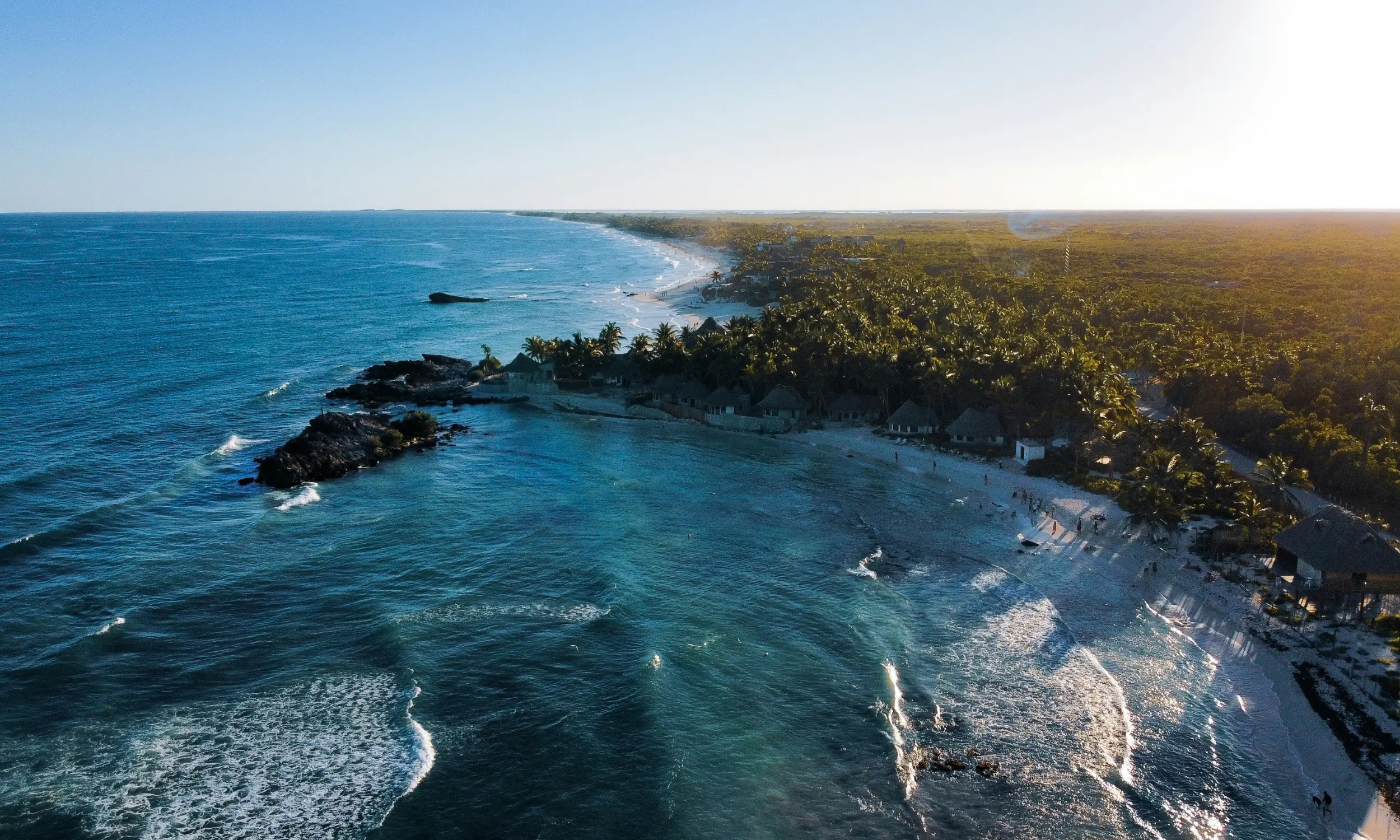
FOUNDERS OF L'TOPIA | MICHAEL GILL ON BUILDING A NEW STANDARD OF LIVING IN THE RIVIERA MAYA
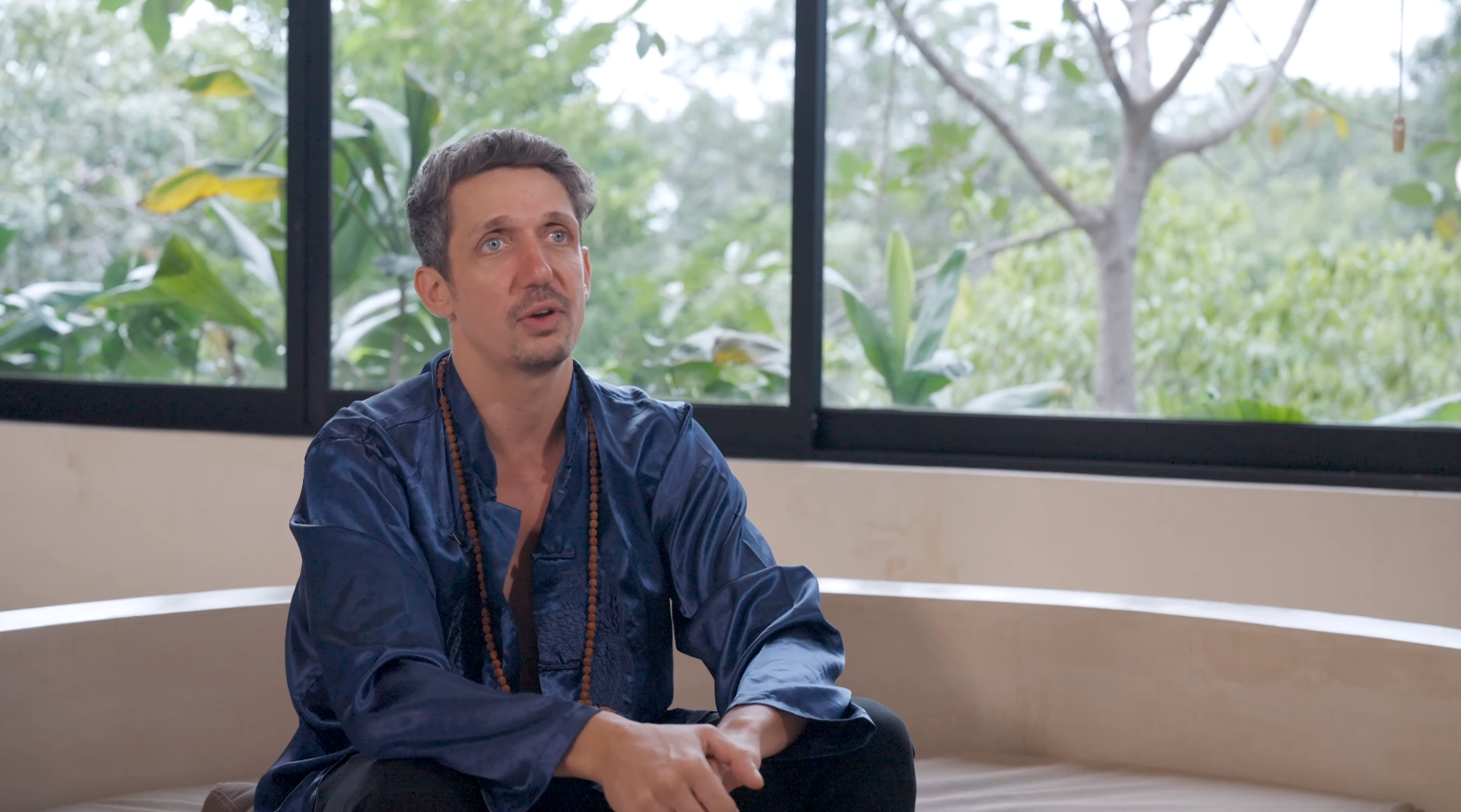
Michael Gill didn't plan to build anything in Tulum. He didn't plan to be in Tulum at all.
A London born entrepreneur with a background spanning music, finance, and property, Michael is the founder and driving force behind L'TOPIA, the luxury residential brand redefining what it means to own in the Riviera Maya. He had spent years moving between industries with the same underlying instinct. Find what's original, resist what isn't. By the time the pandemic arrived he was already running a brokerage, already attuned to how markets move and where genuine value gets overlooked. Tulum wasn't on the plan.
The borders closed, a friend extended an invitation, and he came. He knew the place well enough from previous visits to feel comfortable, not well enough to know he'd never leave.
"Tulum chose me," he says. "I haven't looked back."
Six years later he has two businesses, a brokerage and a development, and a construction site that has become something of a local reference point. The development is L'TOPIA's Genesis Collection, six architect-designed villas within The Awen private community. It is, in many respects, a physical statement of intent about what residential development in this part of the world can be when the ambition behind it is not governed by what the market is currently rewarding.
Before Tulum, Michael spent years inside London's underground music scene. Producing, DJing, immersed in the culture that existed well beneath commercial taste. UK Garage. UK House. Scenes that were defined not by what they embraced but by what they refused, the copy, the derivative, the thing made to sound like whatever had just worked. He spent a long time understanding how trends moved, how something genuinely original would surface, find its audience, and then get steadily replicated until the replicas outnumbered the original and the whole thing lost its reason for existing.
When he arrived in Tulum and looked at what was being developed, he recognised the dynamic immediately.
"I was always obsessed with trends. Specifically, with not following them. In music, the commercial stuff is very trendy. It sounds good for a moment and then it's abandoned, because everyone's trying to sound like whoever just succeeded. When I came to Tulum, I saw the same thing in real estate. Who can build the fastest version of whatever's hot right now. And for me, that was exactly what I wanted to move as far from as possible."
The distinction he draws is a simple one, but it carries real weight. "Trendy is a pull. Unexpected is unexpected. They're opposites." The Genesis Collection was conceived entirely from the second position. Six residences that don't reference each other, don't reference the prevailing market aesthetic, and were not designed with any reference to what was performing well at the time of their conception.
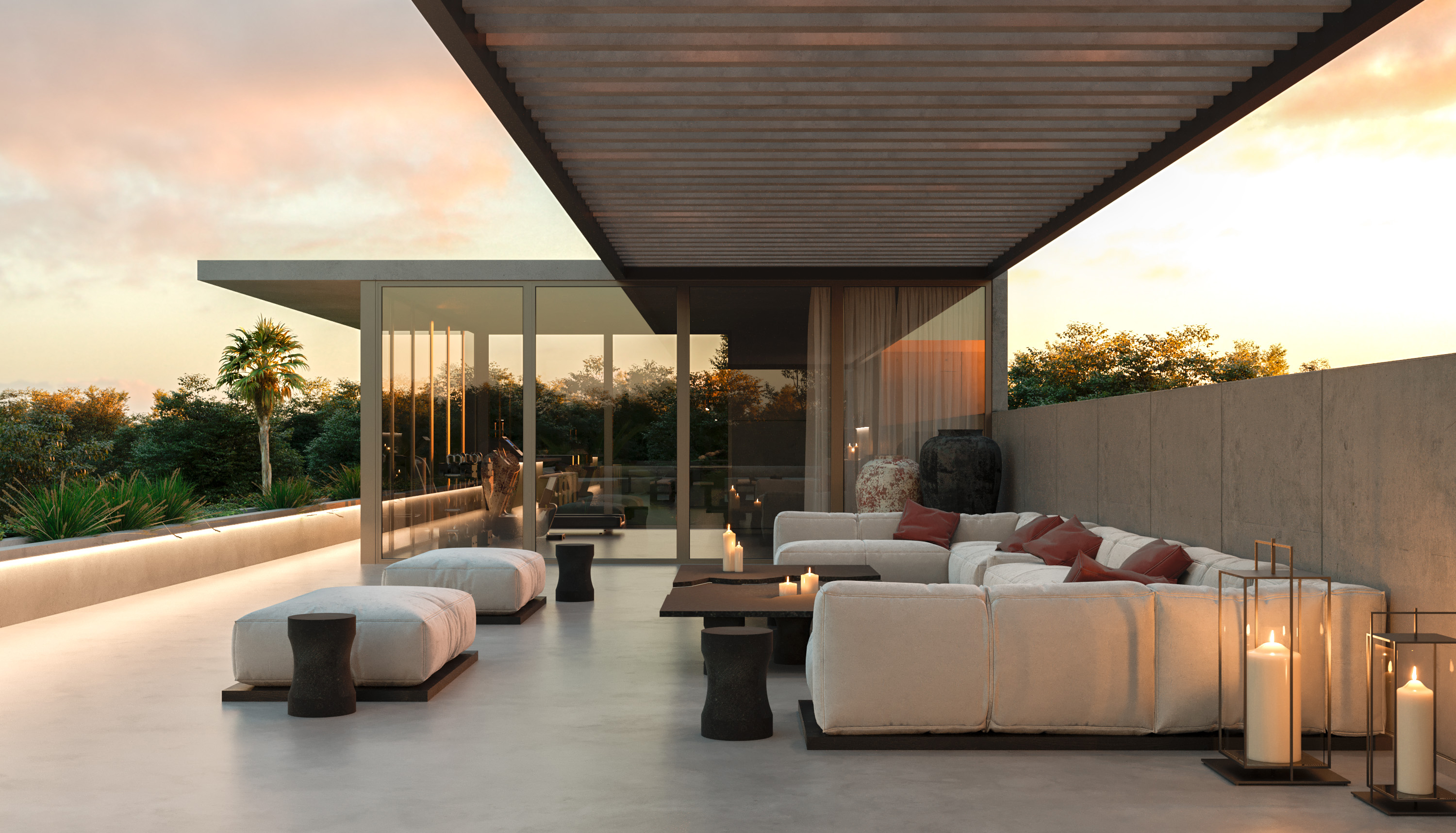
To understand why that matters, it helps to understand the environment it was built against. Tulum's development market moves quickly and often collectively. A project finds success and within a season its proportions, its material palette, its approach to landscaping begin appearing across plots throughout the municipality. The velocity is, in its own way, impressive. The results tend toward the predictable, competent, recognisable, and unlikely to hold attention beyond the moment of purchase.
The Genesis Collection was designed with a longer attention span in mind. And Michael understood from the outset that architecture alone would not be sufficient to achieve it.
"You can't just say, here's a beautiful house. People want services, they want management, they want to understand what ownership actually feels like day to day. So we reinforced the team until we felt capable of delivering that."
What followed was a period of careful, unhurried assembly. A former Global Director at Saatchi and Saatchi shaped the brand from its earliest stages. Gabriel Holt, whose hospitality career encompasses Habitas, Scorpios, Nomade, and the development of international programming across Mykonos, joined as Head of Hospitality. Jeff Daubney brought a wellness programme of genuine depth, extending from circadian lighting systems and in-residence yoga through to stem cell therapies and ancient Mayan temazcal ceremonies. Roberto Carli of PGA Arquitectos, Italian born and twenty five years into his career building in Tulum, took charge of construction.
"I was just a cog in the machine. What you see at L'TOPIA today is the accumulation of advice and expertise from people who knew things I didn't. I'm grateful for every one of them."
The name was chosen with deliberate intent. L'TOPIA is utopia rendered through a Latin lens, and the ambition it represents is meant in the most literal sense.
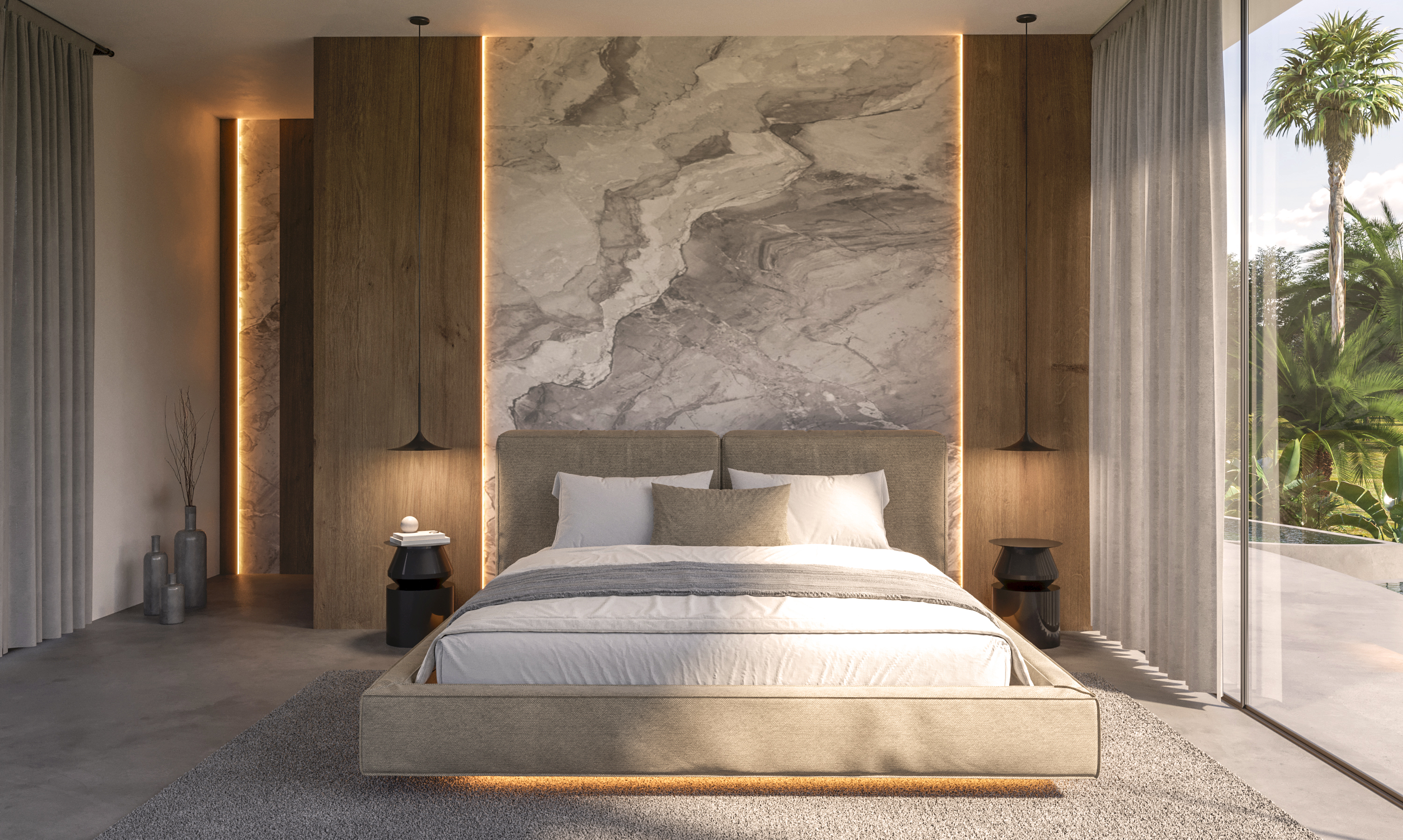
"What we were trying to create is the most utopian experience possible. One that heals from within. Because many people live very stressful lives, particularly in North America, and we wanted to create the ultimate retreat. Where light moves through the architecture in a way that actually supports your circadian rhythms. Where the house isn't just an asset. It heals you."
That final phrase is not the language of marketing. It was the standard against which every decision in the Genesis Collection was measured. Every material selection, every lighting specification, every spatial proportion across all six residences was considered against the question of whether it contributed to that experience or compromised it.
The collection itself spans a deliberately wide range. Paradiso and Ananda move toward the contemporary and the minimal. Villa Aire takes a more considered brutalist position, shaped in part by the influence of architect Guillermo Arcocer. Hacienda is a studied homage to the great estate architecture of Yucatán, those vast colonial structures that still stand across Mérida, some of them three centuries old, as museums and public buildings, their scale and quality of craft entirely intact. Los Arcos carries perhaps the most personal origin story within the collection, having grown from architectural drawings Michael had originally commissioned for a residence on land he already owned elsewhere. That project never came to pass, but the drawings remained. When The Awen presented plots of sufficient scale, the concept was revisited, expanded, and allowed to become something the original constraints had never permitted.
"We took what had been a fairly typical villa design and distributed it. Made it modular, more ergonomic, much longer. The lack of constraints made it possible."
What connects all six villas, across their markedly different aesthetic positions, are the elements that make the collection legible as a whole. Consistent garden treatments, specific material choices, spatial details that establish continuity between residences regardless of whether the individual villa sits closer to the contemporary or the traditional end of the spectrum.
"We wanted to use recurring motifs to acknowledge the L'TOPIA brand, regardless of whether the villa is modern or traditional. That was our main consideration."
The land within which the Genesis Collection sits deserves its own consideration. The Pino Suárez master plan, the broader territory surrounding The Awen, operates according to environmental principles that go considerably further than compliance. Roads are constructed using eleven layers of sediment following ancient Mayan methods, a technique that allows water to permeate through the surface rather than run off, preserving the root systems of surrounding mangroves. Asphalt, as Michael learned from the Pino Suárez team, releases diesel compounds into surrounding vegetation over time, gradually killing what grows beside it. It is not used here.
"These people genuinely care about the environment. And they don't advertise it. It's not a brand position. It's just how they work. No matter how much money you offer them, they won't negotiate on these things."
There is something that non-negotiability produces, beyond the environmental outcomes themselves. A consistency of character. A place that holds its integrity over time because the people responsible for it have decided, at the level of principle, that certain things are not available for compromise. Trees on the Pino Suárez site are felled during a full moon, in keeping with Mayan wisdom that holds the timber to be drier and of better quality at that point in the lunar cycle. Whether or not one holds that belief, the practice speaks to something important about the seriousness with which the land is treated. This is not environmental responsibility performed for an audience. It is the natural expression of a set of values that precede any conversation about brand positioning.
"You see beautiful nature around you. The projects reflect the same philosophy."
Roberto Carli's construction sites are visibly different from anything else operating in Tulum. Organised, clean, run by a team whose discipline and competence are apparent on arrival. Michael is direct about what distinguishes them.
"When you look at Roberto's sites, you see something completely different from other builds in Tulum. A lot of developers arrive here with all their ego and their vision and don't stop to consider that the terrain is completely different from what they're used to. Tulum is not an easy place to build. Roberto has been building here for twenty-five years. That knowledge is not transferable. It's earned."
The first completed show home within the Genesis Collection is approaching completion, finished with a specific buyer in mind but always conceived as something more than a single transaction. A physical argument for everything the collection represents, a space in which the ideas behind L'TOPIA become inhabitable rather than theoretical.
What remains with you, listening to Michael speak about the project, is the quality of patience in how he thinks about it. Not the patience of someone waiting for the market to move in a particular direction, but the patience of someone building for a horizon that extends well beyond any single cycle. What a place looks like decades from now, when the people who built it are no longer present to explain the decisions behind it.
"We wanted to create a project that was truly unexpected. Timeless. Not built for short-term return. A legacy project in Tulum, recognised around the world. I don't think many people had that agenda when they were building here. There are some, but not many. We wanted to be part of that group."
The Genesis Collection is the result of that conviction made physical. Six residences, each distinct, each arrived at through its own process, and all of them expressions of something increasingly rare in this market. The decision to build without compromise, for people who recognise the difference.
Watch the full conversation with Michael Gill on the making of L'TOPIA's Genesis Collection.
Explore L'TOPIA
contact us