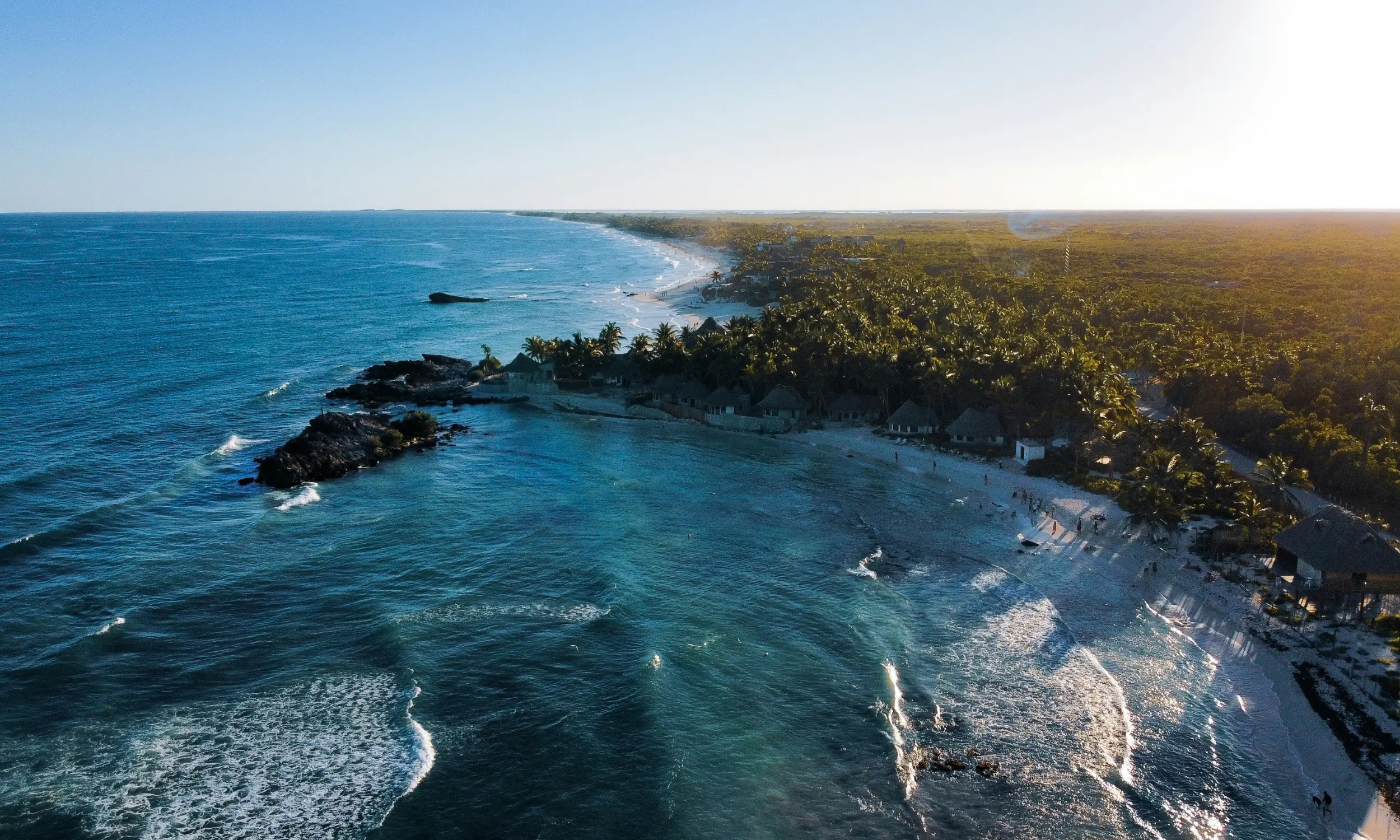
VOICES OF L'TOPIA: SAM GORDON ON PRESERVATION BEFORE PERFORMANCE IN THE RIVIERA MAYA

Sustainability usually shows up at the end of a development conversation. Solar panels. Bamboo finishes. Green language in the brochures. But real environmental integrity starts way before anyone picks materials or produces renderings or writes marketing copy. It starts with restraint.
Sam Gordon, one of Tulum's most uncompromising voices on sustainable development, says it plainly: "Construction is destructive, in whatever way you look at it, it's destructive." That acknowledgment is where you have to begin. Not with denial or branding or trying to offset things aesthetically.
In jungle environments like Tulum, preservation isn't symbolic. It's structural. Sam's clear about this: "I don't allow clear-cutting in the jungle." Clear-cutting is efficient, sure. It makes logistics simpler, speeds up timelines, makes the drawings easier to execute. But it removes the ecosystem that regulates temperature, manages water absorption, protects the soil, sustains biodiversity. And once it's gone, it's gone.
He puts the contradiction bluntly: "How can you call yourself sustainable from the beginning when you go in and take a 200-year-old tree and build a one-year building?" No finish, no solar panel, no bamboo cladding can ethically offset that choice. If sustainability starts after excavation, you've already compromised it.
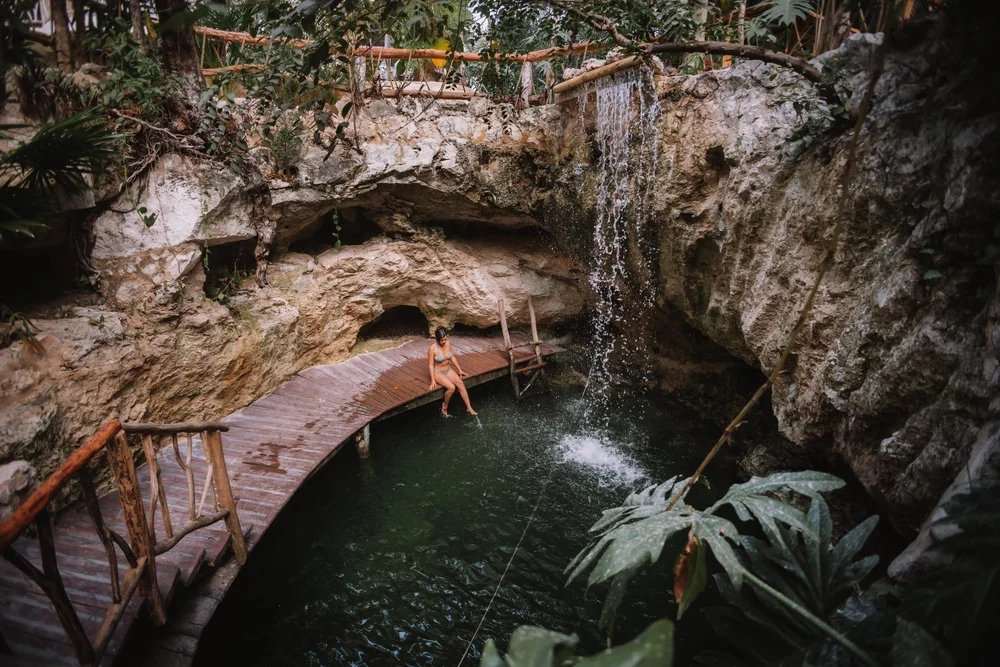
Kan Cenote - Tulum, Riviera Maya, Mexico.
In fragile ecosystems, the jungle isn't backdrop. It's infrastructure. Root systems regulate groundwater. Canopy coverage reduces heat gain. Mature vegetation stabilizes microclimates in ways no mechanical system can replicate. Responsible development starts by asking which trees can stay, which ones can be transplanted instead of removed, how the building can adapt to what's already there instead of maximizing its footprint.
Sam's approach: "Can you move that tree? Yes. You can transplant the tree. You can make the effort to do it and still have sustainable ideology around it." The effort is what makes the difference. Preservation doesn't usually show up in the glossy photos. It doesn't create immediate visual impact. But over time, it's what determines whether a development actually integrates or just slowly erodes everything around it.
Environmental integrity isn't always visible. "Bioclimatic architecture, when it's done correctly, is almost invisible. You don't feel it, you don't see it. It's just there." In the Caribbean, climate is brutal and constant. Salt air, humidity, UV exposure, insects, heat. European standards don't translate. Orientation matters. Shade matters. Cross ventilation matters. Airflow matters.
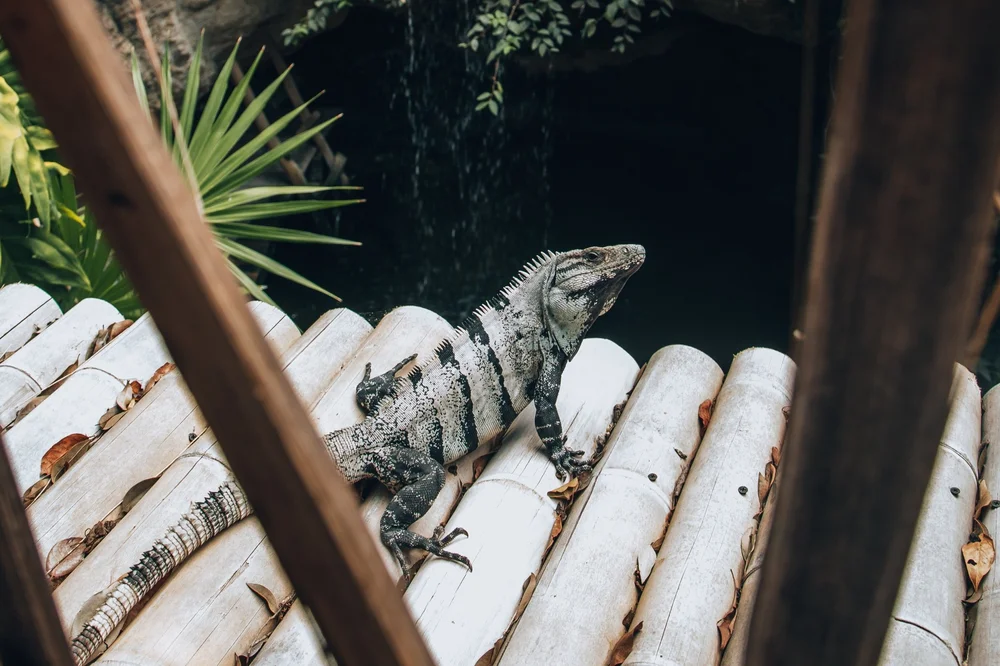
Kan Cenote - Tulum, Riviera Maya, Mexico.
Sam explains a straightforward but critical difference: "In the UK we want to build facing south. Here we avoid building south, because the sun heats everything." These aren't aesthetic choices. They're environmental responses. When you do it properly, energy consumption drops naturally. Mechanical reliance goes down. Comfort becomes passive instead of forced. That's sustainability actually working, not in how it looks but in how it performs.
There's a moment Sam describes from one of his projects where he performed a ceremony before construction started, asking the animals to leave the land. Not as symbolism. As acknowledgment. He talks about a toucan flying across during the ceremony and says it felt like confirmation he was moving forward responsibly. This isn't activism or theatrics. It's understanding that development enters an existing system, and that system deserves respect. Environmental integrity isn't a marketing angle. It's a discipline that shapes what gets built and what doesn't.
The Riviera Maya sits on top of one of the most delicate underground water systems in the world. Cenotes aren't isolated features. They're connected arteries of subterranean flow. Every drainage decision, every wastewater system, every foundation you put in interacts with that system. Sam sees this as non-negotiable: "We are in such a delicate area with all the cenotes around us. If the water systems aren't correct, what we're putting in the ground is polluting what's beneath us." And the contradiction is obvious: "People come here for the beautiful Caribbean Sea and the cenote systems, so why are we polluting them?"
Water infrastructure doesn't show up in marketing materials. But it's the actual environmental test of any tropical development. Sealed wastewater systems. Verified filtration. Soil analysis. Controlled runoff. Density discipline. Without those, sustainability is just cosmetic.
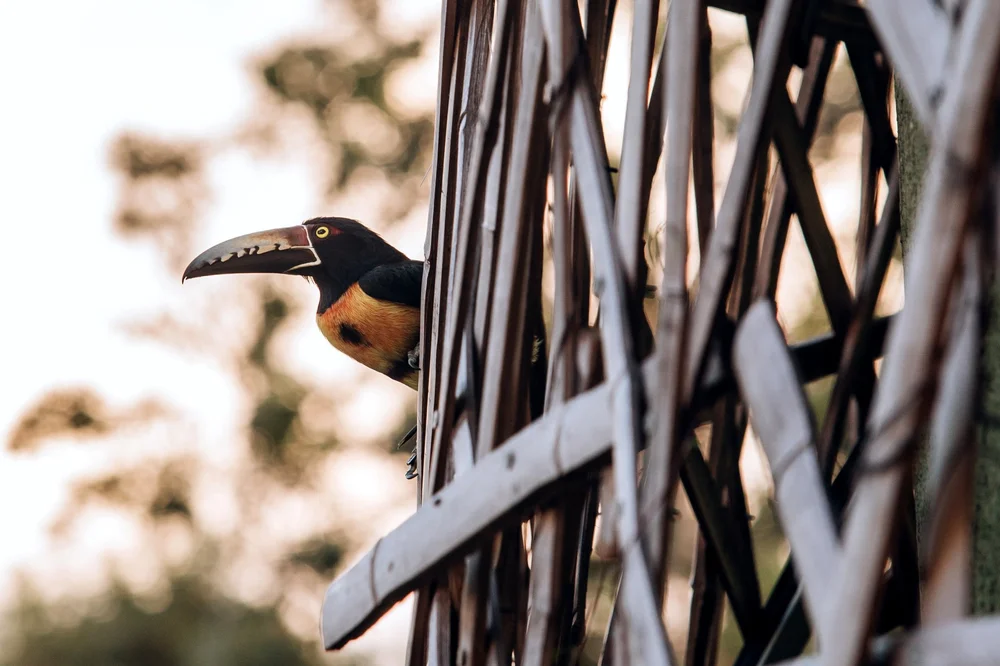
KAN - Tulum, Riviera Maya, Mexico.
Sam's framework is specific: "Sustainability, for me, starts at ground level. We live in a world of measurement. We can measure air quality, soil mechanics, what's happening in the ground. The only real sustainability goals you can create are real goals." Sustainability isn't bamboo. It's not a solar panel. It's not a word. Sam pushes back on the material narrative directly: "Putting a solar panel on or using a piece of bamboo gives you the marketing ability to use the word sustainable when really it isn't."
Bamboo can look good. Solar panels can be useful. But origin matters. Longevity matters. Lifecycle impact matters. What system a material supports and whether it actually reduces long-term environmental strain. A material without a model is just decoration. A system without measurement is just branding.
Sustainability has become a diluted word. "Unfortunately, sustainability becomes a word. Regeneration becomes a word." When everything gets labeled sustainable, nothing actually is. Real sustainability in fragile ecosystems means refusing to clear-cut, establishing measured environmental baselines, engineering water systems correctly, maintaining reduced density, using local material logic, building for long-term durability, staying accountable at every construction stage. It means accepting that building is disruptive and then choosing to minimize that disruption on purpose.
These principles shaped L'TOPIA's Genesis Collection. Six architect-designed residences within The Awen's preserved jungle corridor. Ancient trees integrated into floor plans instead of removed for convenience. The cenote system protected by engineered infrastructure, not just policy.
If you erase the jungle first and justify it later, the conversation's already over.
Environmental integrity doesn't start with features. It starts with what you choose not to remove. For anyone evaluating residential investment in the Riviera Maya, that distinction matters more than any marketing language. The ecosystem that attracted you here is either being protected or it isn't. Twenty years from now, that answer will be visible.
This is your chance to be part of something worth preserving.
Explore the Genesis Collection.
Request Private Access.
contact us