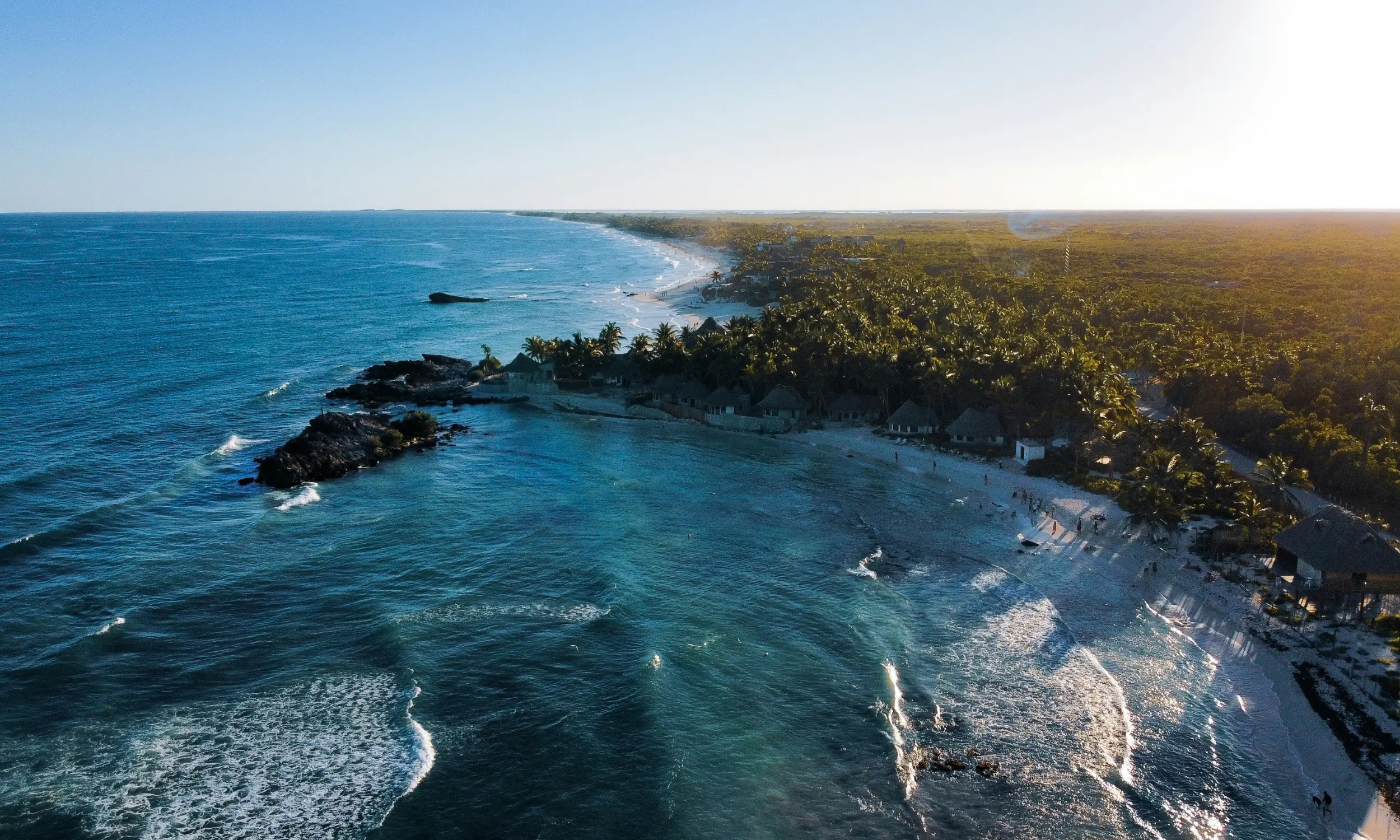
WHY PEOPLE QUIETLY STEP AWAY FROM CITIES

People rarely leave cities because they stop appreciating what they offer.
Urban centers remain unmatched in opportunity, culture, and energy. They concentrate ambition, accelerate careers, and create ecosystems where movement and progress feel natural. For many, cities are where professional identity forms and momentum builds.
But across global markets, a subtle shift has been taking place.
Increasingly, people aren’t stepping away from cities out of dissatisfaction. They’re responding to a growing sense of misalignment between pace and wellbeing.
Modern cities are designed for efficiency and constant engagement. Sound, movement, light, and information rarely pause. Even moments of rest are shaped by schedules, screens, and stimulation.
Over time, the body adapts to this intensity.
Not through overt stress, but through continuous low-level alertness. Attention stays elevated. Muscles remain subtly engaged. The nervous system rarely fully powers down.
This state is functional.
But it carries a cost.
Many only recognize the shift when they spend time outside dense urban environments. Sleep often deepens quickly. Thoughts slow without effort. Tension releases almost automatically.
.jpg)
Living Room, Hacienda - The Genesis Collection, Riviera Maya, Mexico.
What feels like relaxation is, in reality, regulation returning.
Cities compress experience. They encourage speed, productivity, and density. Silence becomes scarce. Darkness is softened by artificial light. Natural rhythm gives way to constant activity.
Without contrast, the nervous system loses its true resting state.
As a result, people increasingly seek balance through smaller adjustments. Short retreats. Nature escapes. Quieter neighborhoods. Remote work days.
These aren’t lifestyle indulgences.
They are attempts to restore equilibrium.
For a growing number of people, however, temporary relief no longer feels sufficient.
Instead of short breaks, they begin reconsidering the environments where daily life takes place.
What would living feel like in spaces where stimulation is intentional rather than constant?
Where quiet is integrated, not rare?
Where attention can settle naturally instead of being continuously pulled outward?
This question is reshaping how people think about location, housing, and lifestyle.
Stepping away from dense urban centers does not signal rejection. Many continue to engage with cities professionally and culturally.
But increasingly, home is being chosen in places that offer a different rhythm.
In lower-density environments with fewer sensory demands, daily life begins to reorganize. Focus deepens. Creativity becomes more fluid. Conversations slow. Time feels less compressed.
Rather than shrinking experience, many find that life expands.
Urban intensity does not exhaust people because it is dramatic.
It exhausts because it is constant.
The body is built to handle periods of activation, but it requires regular intervals of quiet to reset. When those intervals disappear, stress becomes ambient. Subtle, but cumulative.
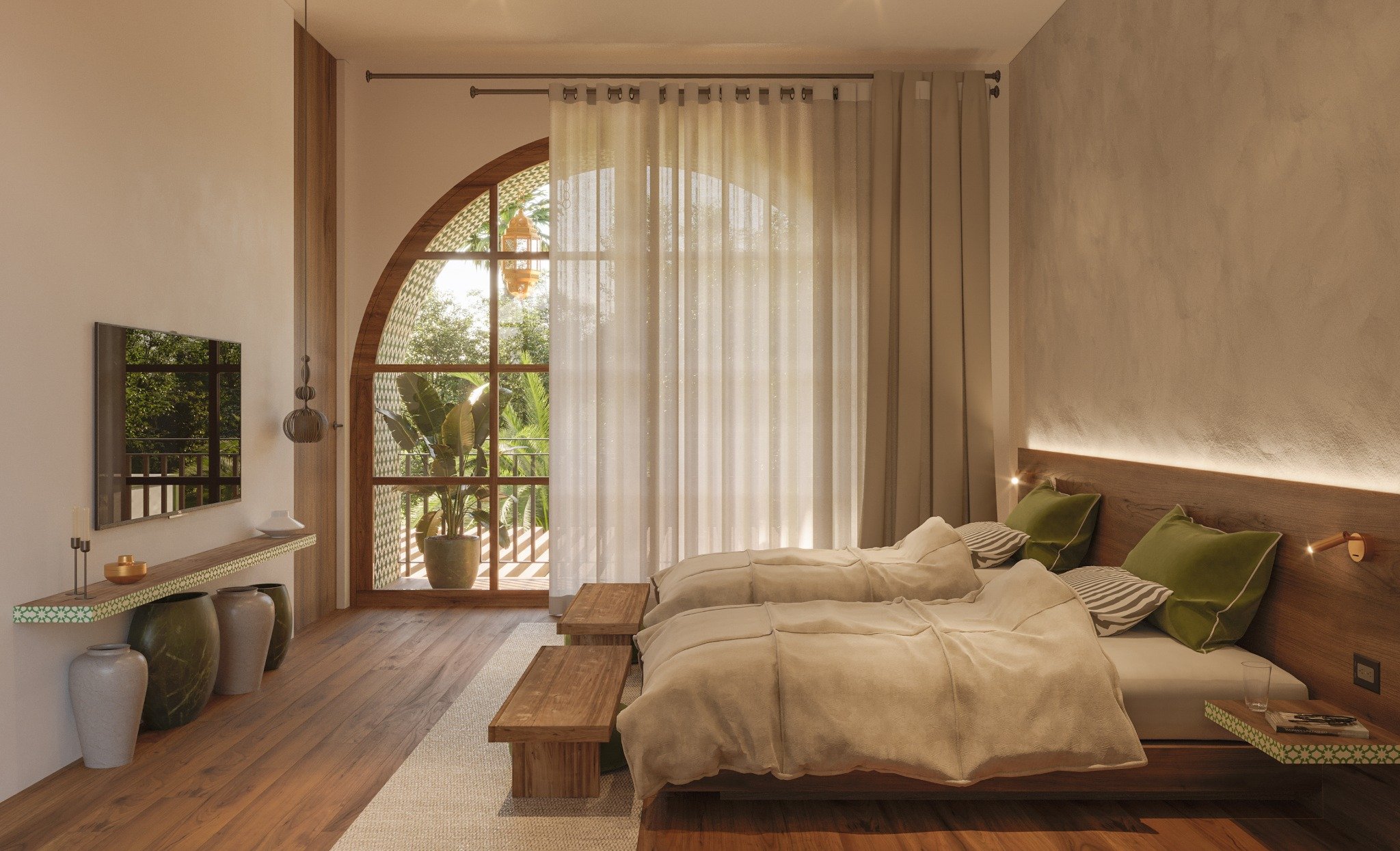
Bedroom, Hacienda - The Genesis Collection, Riviera Maya, Mexico.
Spaces that provide distance from noise, congestion, and interruption restore that balance. They allow the nervous system to disengage naturally. They create room for deeper rest, clearer thinking, and steadier energy.
In these environments, rest stops feeling like something that must be scheduled or earned.
It becomes part of daily life.
This is why so many people are quietly rethinking where and how they live. Not dramatically, and not as a statement.
But through a gradual gravitation toward places that feel more aligned.
They aren’t moving away from opportunity.
They’re moving toward sustainability.
Toward lifestyles where stimulation is chosen rather than imposed.
Where quiet is not absence, but presence.
Where pace supports wellbeing instead of competing with it.
Cities will continue to play a vital role in culture and progress.
But alongside them, a growing value is being placed on environments that offer space, rhythm, and restoration.
Not as escapes.
But as places to live.
contact us