DESIGNED TO LAST FOR DECADES : WHAT EACH VILLA IS MADE OF ?
WHAT EACH VILLA IS MADE OF ?
A house reveals its character through its materials long before anyone studies a floor plan.
The surface underfoot, the grain of the wood, the texture of a wall, the way stone catches the morning light. These are the elements that shape daily life, often more than the architecture itself. They are what you experience first, and what you continue to experience years after the drawings have been forgotten.
In luxury development, specification is where intention either shows up or it doesn't.
It is easy to think of materials as a finishing touch, something selected after the design has already been resolved. They are among the earliest architectural decisions. They determine how a house will weather, how it will respond to climate, and how naturally it will belong to its surroundings.
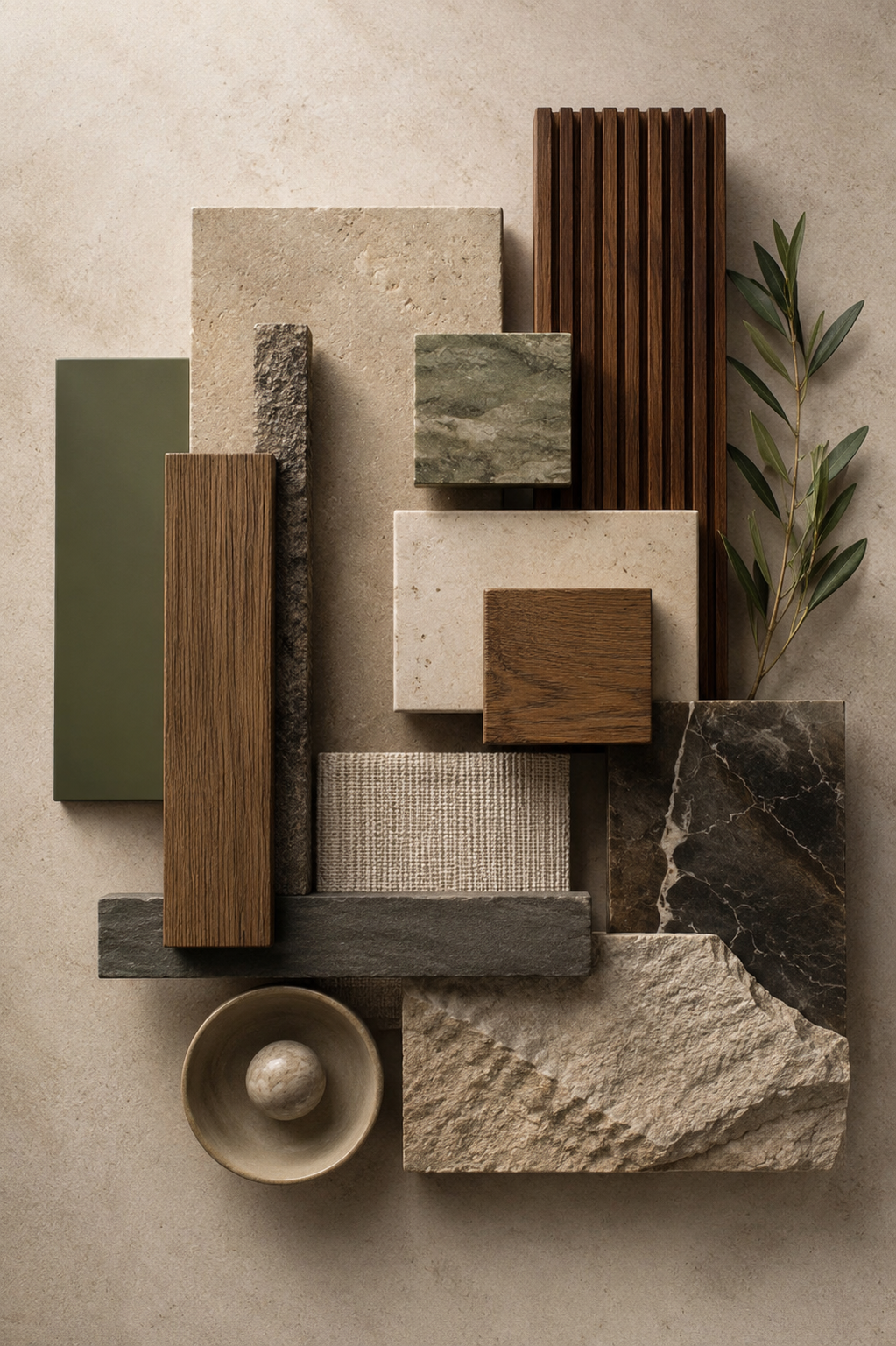
Across the Genesis Collection, every villa carries its own material fingerprint, chosen to suit the architecture and the place it stands in. Each home speaks a different language, but they all begin with the same belief: materials should improve with time.
Building in Yucatán demands a particular sensitivity. Heat, humidity, and the intensity of natural light reward materials that are honest and enduring. Traditional finishes such as chukum have survived for generations because they work with the climate rather than against it. Regional hardwoods carry a natural warmth that imported alternatives rarely achieve. Natural stone gains character through use instead of losing it.
For us, luxury means designing for time. Building for how a home will weather, settle, and deepen over decades.
Ananda holds the lightest palette of the collection. Lorein Castel floors and a Castel Storm White feature wall keep the interiors calm and bright, while encino in vertical grain introduces warmth without weight. It is a house designed to hold the morning light.
Casa Zapote grounds its warm minimalism in stone. Travertine floors bring an aged, tactile quality from the first step, paired with Silestone Calacatta Tova surfaces and parota wood for depth. The result feels settled, as though the house has always belonged to its landscape.
Hacienda carries the richest and most textural palette. Silestone Bronze Rivers and a natural stone veneer island create depth and shadow, while an Amazonita mosaic and Irati Castel floors root the house in the architectural traditions of Yucatán.
Los Arcos is the most artisanal of the villas. Chukum, the traditional lime-based finish, covers both interior and exterior walls, applied and polished by hand so that no two surfaces are identical. Tzalam wood, a pebble pool finish, and polished concrete baths complete a palette that feels entirely of the region.
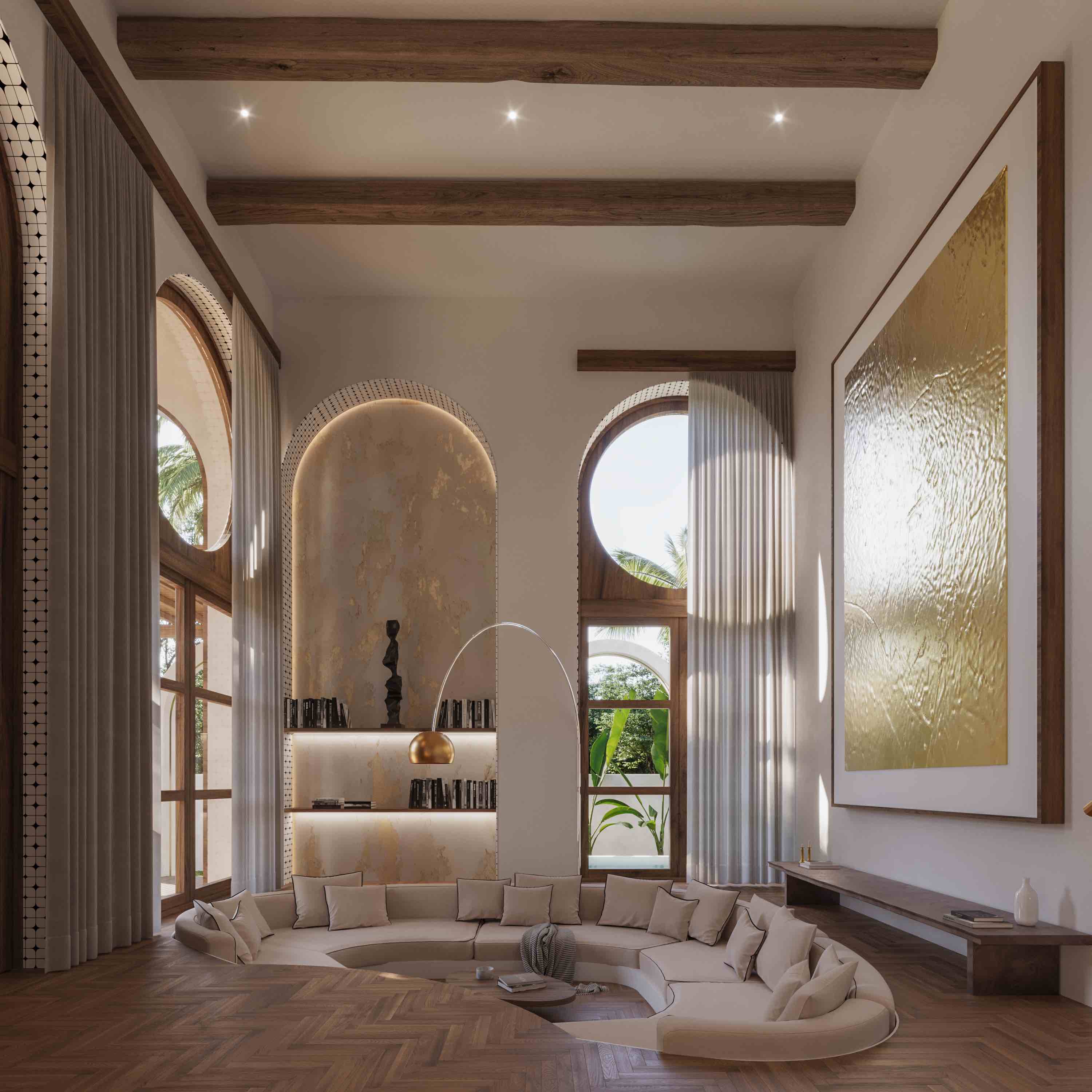
Paradiso moves in a cooler and more fluid register. Sensa Oihana surfaces and Silestone Victorian Silver create a quieter expression, softened by rosa morada wood and the flowing lines of its concrete forms.
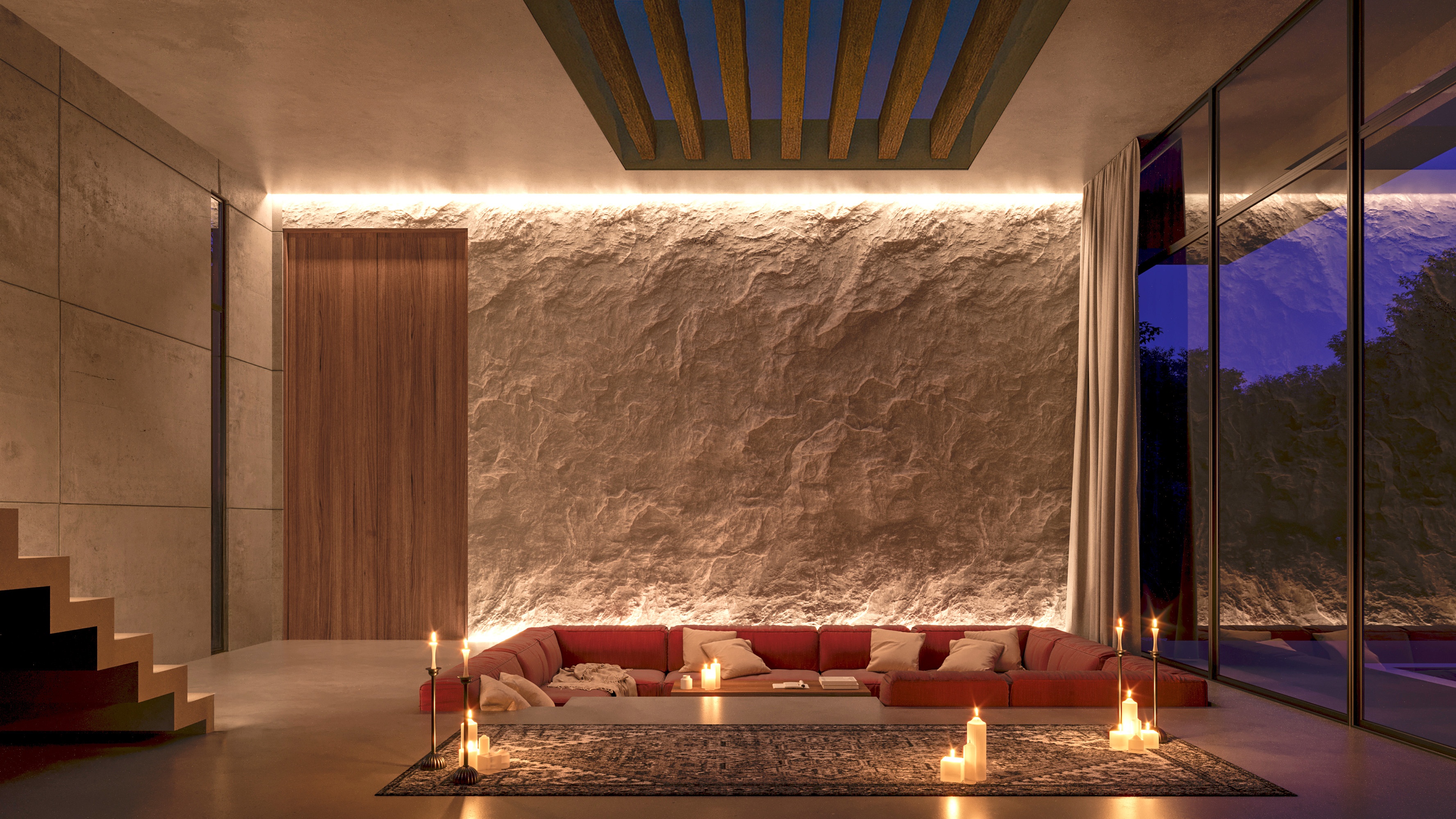
Aire speaks in the language of Mexican brutalism. Dekton Grafite, pressed concrete walls, and tzalam in vertical grain give it the deepest and most architectural palette of the collection, a house of mass, shadow, and quiet.
For all their differences, the villas share a common discipline. Regional hardwoods, often expressed through vertical grain, run through nearly every house, a subtle thread connecting distinct identities. It is the kind of decision that rarely announces itself, yet quietly holds an entire collection together.
A well-designed home should feel connected to its setting. The materials should reflect the landscape, the climate, and the traditions that shaped the place long before construction began. When a home is built with that relationship in mind, architecture becomes less about objects and more about belonging.
Materials are the part of a home that cannot be value-engineered later. A travertine floor will weather differently than porcelain. Chukum records the hand of the artisan who applied it. Wood deepens with age and sunlight. Stone softens through touch.
These qualities cannot be added after construction.
They are decided at the beginning.
Across the Genesis Collection, every villa speaks its own architectural language, and they all share one standard of material and craftsmanship.
Built this way, a villa does not simply sit on its site.
It becomes part of it.
contact us